

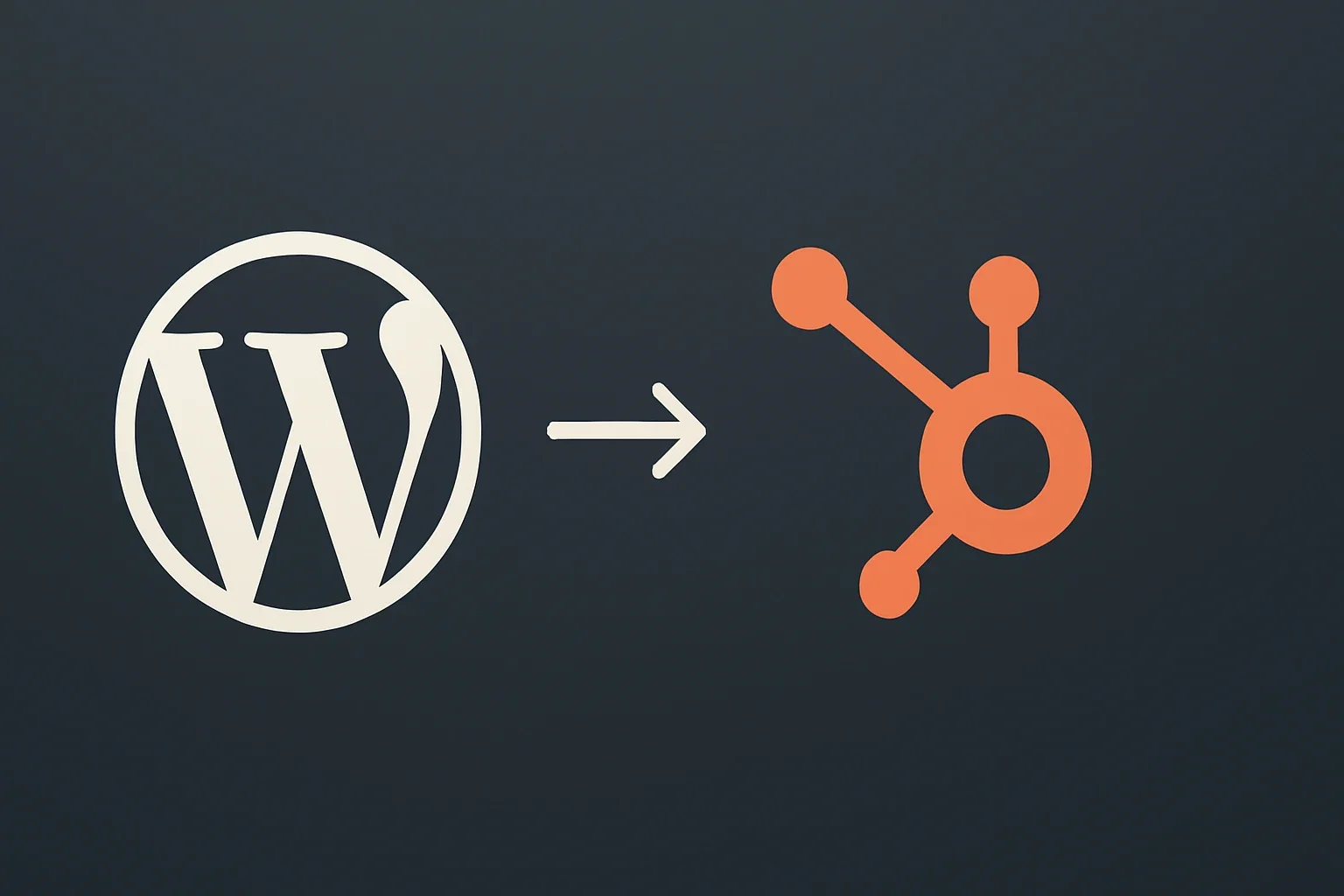
TL;DR — WordPress + HubSpot integration in 2026: (1) install official “HubSpot All-In-One Marketing” plugin — adds tracking script, form sync, popups; (2) all WP forms (Gravity Forms, Fluent Forms, WPForms) sync to HubSpot CRM via native integrations or Zapier; (3) WooCommerce + HubSpot via Makewebbetter integration syncs customers + orders; (4) HubSpot tracking script captures pageviews + conversion events; (5) chat widget from HubSpot can replace Intercom/Drift; (6) marketing automation (workflows, sequences) runs from CRM data. Best for: content-driven B2B marketing where WordPress is the marketing site + HubSpot is the CRM + nurture engine.
When a WordPress website starts generating serious traffic, the next bottleneck is usually not design or content. It is data. Leads get scattered across forms, inboxes, spreadsheets, sales tools, and marketing platforms, and the team ends up spending more time stitching everything together than actually converting visitors into customers. That is where a smart wordpress hubspot integration becomes a growth system instead of just another plugin install.
At Belov Digital Agency, we work with businesses across the USA, UK, and Canada that want WordPress to do more than publish pages. They want WordPress to capture leads, qualify contacts, personalize follow-up, and support sales pipelines without creating technical debt. HubSpot is one of the best platforms for that, especially when it is integrated with WordPress in a strategic way.
This guide breaks down how to approach WordPress and HubSpot integration properly, what methods actually work, where most businesses go wrong, and how to design an implementation that supports marketing, sales, and customer service from day one. We will also look at real-world examples, implementation patterns, and practical decisions around plugins, forms, hosting, tracking, and automation.
Why WordPress and HubSpot Work So Well Together
WordPress is flexible, scalable, and content-friendly. HubSpot is structured, relationship-driven, and built for marketing automation, CRM, and customer lifecycle management. Together, they solve a common problem: WordPress attracts visitors, while HubSpot turns those visitors into tracked contacts with usable context.
The biggest advantage of combining the two platforms is continuity. Instead of having website activity trapped in your CMS and customer activity trapped in your CRM, you create a connected flow where forms, events, and user interactions can inform campaigns, sales outreach, and reporting.
This matters because modern buyers rarely convert on the first visit. They read a blog post, compare services, download a guide, revisit from a retargeting ad, fill out a form, and later respond to an email. A properly configured wordpress hubspot integration helps your business recognize that journey.
What businesses usually want from the integration
- Lead capture directly from WordPress forms into HubSpot CRM
- Automatic syncing of contact properties and form submissions
- Visitor tracking for pages, content, and campaigns
- Live chat or chatbot support from HubSpot on WordPress pages
- Better segmentation for email marketing and nurturing
- Reliable reporting from source to conversion
For many companies, the goal is not “connect WordPress to HubSpot” as a technical exercise. The goal is to remove friction from the buyer journey and reduce manual work for the team. That is the real ROI.
Choosing the Right Integration Method Before You Install Anything
There is no single best way to integrate HubSpot with WordPress. The right method depends on your business model, your existing plugins, how your forms are built, and how much control your team needs.
Broadly speaking, the common approaches include the official HubSpot WordPress plugin, third-party connectors such as WP Fusion, automation platforms like Zapier, and custom API-based integrations. Each option has strengths and tradeoffs.
1. Official HubSpot WordPress plugin
The official HubSpot plugin is the easiest starting point for many sites. It typically covers CRM connection, forms, live chat, tracking, and some analytics features. If your needs are relatively straightforward, it can get you operational quickly.
You can learn more directly from HubSpot’s own product page here: HubSpot WordPress plugin. The plugin is also available in the WordPress repository at WordPress.org.
Best for:
- Small to medium sites that want a fast setup
- Teams that prefer a simple native HubSpot connection
- Sites that mainly need forms, chat, and tracking
2. WP Fusion for deeper automation
If you need more than the basics, WP Fusion is often the more powerful path. It can connect WordPress plugins, user behavior, memberships, LMS tools, ecommerce systems, and more with HubSpot and other CRMs. That makes it especially attractive when a site uses multiple conversion points instead of one simple contact form.
For businesses that need more nuanced syncing and tagging behavior, we often recommend reviewing our affiliated Kinsta resource as well, especially if you are planning performance-sensitive marketing pages: Kinsta.
Best for:
- Businesses using multiple WordPress plugins that need CRM sync
- Sites with membership or gated content workflows
- Teams that need granular tagging and behavioral automation
3. Zapier or middleware tools
Zapier can be useful when you need to connect HubSpot and WordPress without coding and without deep plugin dependencies. It is especially practical for routing data between multiple apps, such as HubSpot, Slack, Google Sheets, and project management tools.
Best for:
- Simple workflows that do not justify custom development
- Rapid prototyping and testing
- Cross-platform automation beyond just WordPress and HubSpot
4. Custom API integration
For larger organizations, custom integration may be the best long-term answer. This is common when a business has specific data mapping needs, strict compliance requirements, or complex workflows that off-the-shelf plugins cannot reliably support.
Best for:
- Enterprise websites
- Complex data governance requirements
- Highly customized funnel logic
How to Plan the Data Flow Before You Build
One of the most common mistakes in a wordpress hubspot integration project is starting with the plugin instead of the process. The technical setup is easy compared to the strategic setup.
Before installation, answer a few important questions:
- What user actions should create or update a HubSpot contact?
- Which form fields are essential, and which are optional?
- Do you need lead scoring, lifecycle stage updates, or deal creation?
- Should every WordPress account become a HubSpot contact?
- Which team owns each follow-up stage after submission?
These answers shape your architecture. If you do not define them early, you can end up with duplicate contacts, incomplete records, poor attribution, and automation that annoys instead of converts.
Field mapping matters more than most people realize
HubSpot is only as useful as the data you feed it. If the form fields in WordPress are not mapped correctly, your sales team may get vague or unusable records. This is why we always recommend designing around contact properties before design or development begins.
For example, if your website includes multiple lead magnets for different service lines, you should map each submission to a source or interest property in HubSpot. That allows segmented follow-up instead of one generic email sequence.
The Best Setup for Most Businesses: A Practical WordPress + HubSpot Stack
There is no universal stack, but a strong setup for a growing business usually includes the following elements:
- WordPress as the website and content engine
- HubSpot CRM as the centralized contact and pipeline system
- A reliable forms plugin or native HubSpot forms
- Tracking code installed sitewide
- Automation rules for nurturing and handoff
- Performance-focused hosting and caching
For companies that want better speed, uptime, and support around that stack, we often discuss hosting choices with clients. Providers like Kinsta, SiteGround, and WP Engine are popular in the WordPress ecosystem because integration performance often depends on how well the site loads and how stable the environment is.
A fast, well-maintained website helps HubSpot scripts load consistently, reduces form abandonment, and lowers the risk of tracking errors. In other words, performance is not separate from marketing; it is part of conversion infrastructure.
Step-by-Step: Setting Up the Official HubSpot Plugin on WordPress
If you are using the official HubSpot plugin, the basic setup is usually straightforward. But “straightforward” does not mean “strategic.” The goal is not simply to make the plugin appear in the dashboard. The goal is to make sure it supports your lead generation and reporting goals.
- Install the HubSpot plugin from the WordPress dashboard or from WordPress.org.
- Connect it to your HubSpot account.
- Verify that tracking code is loaded on all key pages.
- Test forms, chat, and submission routing.
- Review contact property mapping and lifecycle settings.
- Validate data in HubSpot using a test submission.
HubSpot’s own documentation is a useful reference during setup: HubSpot Knowledge Base.
What to test immediately after installation
- Does the tracking cookie appear correctly?
- Do form submissions create contacts in HubSpot?
- Are all required custom properties being populated?
- Is the chat widget visible on the correct pages?
- Are page visits and source data being tracked?
Testing is important because many plugin installations appear functional while quietly missing key data points. A lead that arrives without source data or form context is far less useful to sales and marketing.
When the Official Plugin Is Not Enough
Many sites outgrow the official plugin. That is not a flaw; it is a sign of maturity. As your business expands, you may need more flexibility in how contacts are segmented, how forms are routed, and how behavioral data is used.
For example, a B2B company might need to sync multiple form systems, including general inquiries, demo requests, content downloads, and webinar registrations. If each form has different logic, automation rules, and follow-up sequences, a more advanced integration layer becomes necessary.
That is where tools like WP Fusion, Zapier, or a custom API strategy can make a major difference.
Example: a professional services firm
Imagine a law firm with separate WordPress landing pages for employment law, immigration law, and business litigation. If every form goes into the same generic bucket, the intake team wastes time sorting leads manually. A smarter wordpress hubspot integration would tag each inquiry by practice area, source page, and urgency, then automatically route follow-up to the correct attorney or intake specialist.
That simple change can reduce response time, improve relevance, and increase consultation bookings.
HubSpot Forms vs WordPress Forms: Which Should You Use?
This is a common question, and the answer depends on your workflow.
HubSpot forms are convenient when you want direct native integration, quick deployment, and easy CRM sync. WordPress forms can be better when your team already uses tools like Gravity Forms, Fluent Forms, WPForms, or Ninja Forms and wants to preserve those workflows.
Popular WordPress form platforms include Gravity Forms, WPForms, and Fluent Forms. Each can work well in a HubSpot-connected environment depending on the implementation.
Choose HubSpot forms if:
- You want the simplest native setup
- You do not need advanced WordPress-specific form logic
- Your marketing team prefers managing forms inside HubSpot
Choose WordPress forms if:
- Your site already relies on a mature form system
- You need conditional logic or advanced routing
- You want to preserve website-level design and UX control
In many projects, the ideal answer is not one or the other. It is a layered approach where WordPress handles the front-end experience while HubSpot manages the CRM, segmentation, and automation after submission.
Why Hosting and Performance Still Affect CRM Success
Marketing teams often overlook infrastructure when discussing CRM integration. But if your WordPress site is slow, unstable, or poorly optimized, you will see it in your data.
Slow pages can reduce form submissions. Script conflicts can prevent tracking from loading. Poor caching can break embedded elements. And unreliable uptime can interrupt user sessions before HubSpot records the interaction.
That is why we pay close attention to hosting, caching, CDN strategy, image optimization, and plugin hygiene during implementation. Even a beautifully designed funnel can underperform if the site environment is neglected.
Resources like Cloudflare can help improve delivery and protection, while database and plugin optimization can reduce load times on high-traffic sites. For businesses running serious content marketing or paid acquisition, those details can directly affect cost per lead.
Real-World Use Cases That Show the Value
Case study 1: B2B agency lead management
A B2B marketing agency had a WordPress site generating consultations from blog posts, service pages, and downloadable guides. Before integration, the team manually copied lead data into spreadsheets and CRM notes. This caused delays and inconsistent follow-up.
After implementing a structured wordpress hubspot integration, each submission was tagged by content source and service interest, then routed into a HubSpot workflow that assigned tasks automatically. Result: the agency improved response speed and could see which content was generating the most qualified opportunities.
Case study 2: Membership site with gated content
A membership-based education site used WordPress as the content layer and HubSpot for lifecycle messaging. By syncing account registration, course completion, and key content interactions into HubSpot, they created targeted nurture campaigns based on user progress.
The benefit was not just automation. It was relevance. New users received onboarding sequences, while returning users got recommendations based on what they had already completed.
Case study 3: Local service business with multiple locations
A multi-location home services company used WordPress location pages to drive calls and quote requests. With the right integration, each form submission could be routed by service area and city, and the sales team could track which page produced the lead. This made paid search and local SEO far easier to evaluate.
The company later used Mailchimp and HubSpot in parallel during a transition period, but HubSpot remained the source of truth for contact records and pipeline activity.
Building Better Lead Forms for More Conversions
Forms are where integration becomes visible to users. If a form feels clumsy, too long, or disconnected from the page’s promise, conversion rates suffer even if the backend sync is perfect.
Good form design is one of the most overlooked parts of a successful integration. The best-performing forms are usually simple, clear, and matched to intent.
Form optimization principles
- Ask for only the information you truly need
- Match the offer to the number of fields
- Use clear labels and helpful microcopy
- Make the next step obvious
- Route users into the right HubSpot workflow immediately
If you want to compare form UX approaches or explore content optimization ideas, our blog is a good place to start: Belov Digital Blog. For project discussions, you can also reach our team through Contact Us.
How to Use Automation Without Making It Feel Robotic
Automation is powerful, but too much of it can feel impersonal. The best HubSpot automation improves timing and relevance without sounding like a machine wrote everything.
For example, if someone downloads a guide from your WordPress site, HubSpot can trigger a follow-up sequence based on the topic of the download. If they later visit a service page, that behavior can increase their lead score or move them into a more sales-ready segment.
Good automation examples
- Welcome emails after form submission
- Topic-based nurture sequences
- Sales alerts for high-intent behavior
- Follow-up reminders after quote requests
- Lead scoring based on page views and engagement
Used well, automation creates a better customer experience. Used poorly, it creates noise. The difference is usually in segmentation, timing, and message quality.
Privacy, Consent, and Compliance Should Be Part of the Plan
For businesses operating in the USA, UK, and Canada, privacy is not optional. Your integration must support consent management, cookie handling, and data collection policies that align with regional requirements and your legal obligations.
This is especially important when your WordPress site uses tracking scripts, chat widgets, embedded forms, or behavior-based personalization. You should confirm how user consent is captured, how tracking cookies are loaded, and how records are stored in HubSpot.
Depending on your audience and operations, you may need to review GDPR guidance, UK privacy standards, and Canadian anti-spam rules. You can reference broader guidance from sources like GOV.UK, Canada.ca, and FTC when evaluating your compliance baseline.
How Belov Digital Approaches HubSpot and WordPress Projects
At Belov Digital, we do not treat integration as a plug-and-play task. We treat it like a revenue system. That means we start with business goals, map the customer journey, define the data model, and then decide which tools should do what.
In practical terms, that often means looking at:
- Which pages generate the most qualified leads
- Where visitors drop off in the funnel
- Which forms create the best sales opportunities
- How HubSpot should segment and nurture each contact type
- What reporting the leadership team actually needs
Sometimes the answer is the official plugin. Sometimes it is WP Fusion. Sometimes it is a mixed stack that uses WordPress for UX, HubSpot for CRM, and middleware for special cases. The right answer depends on the business.
If you are evaluating a new build, migration, or optimization project, the safest path is to design the integration before launch rather than repairing it later. That saves time, reduces risk, and gives marketing a cleaner start.
A Practical Implementation Checklist
Here is a concise checklist we recommend before going live with your integration:
- Define business goals and primary conversion actions.
- Audit current forms, plugins, and tracking scripts.
- Choose your integration method based on complexity.
- Map WordPress fields to HubSpot properties.
- Confirm privacy, consent, and cookie handling.
- Test submissions, lead creation, and workflow triggers.
- Review site speed and script performance.
- Train marketing and sales teams on the new process.
- Measure results and refine the setup after launch.
That checklist may look simple, but it prevents most of the expensive mistakes we see during recovery projects.
Final Thoughts for Teams That Want More Than Basic Syncing
A strong wordpress hubspot integration is more than a technical connection. It is a strategic bridge between content, conversion, and customer relationship management. When done well, it helps you capture better leads, respond faster, segment more intelligently, and make smarter decisions based on real data.
When done poorly, it becomes another disconnected tool that adds complexity without adding value. The difference usually comes down to planning, data structure, and implementation quality.
If your business is ready to improve how WordPress and HubSpot work together, Belov Digital can help you design an integration that fits your stack, your audience, and your growth goals. Explore more about our approach at Belov Digital Agency or start a conversation through Contact Us.
Whether you need a simple lead capture setup, a more advanced automation framework, or a full WordPress marketing rebuild, the best time to fix your system is before your next campaign scale-up.